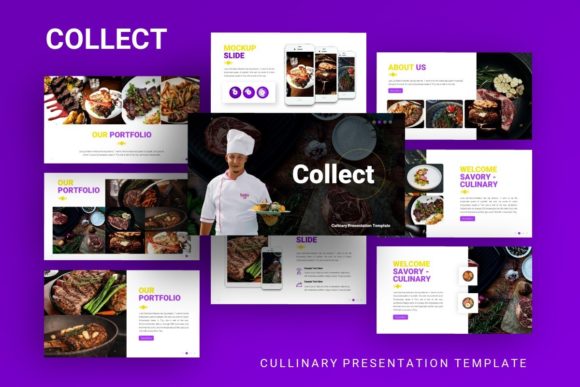
Collect Presentation Template: A Versatile Framework for Culinary and Corporate Storytelling
In the modern landscape of visual communication, the line between niche industry tools and general-purpose design assets has become increasingly blurred. Professionals across diverse sectors seek presentation frameworks that offer both aesthetic specificity and structural flexibility. The Presentation Template - Collect exemplifies this hybrid approach, originally positioned within the culinary sphere but engineered with a versatility that extends to creative agencies, corporate profiles, startups, and personal portfolios. Understanding how to leverage such a multi-faceted tool requires looking beyond its surface-level theme to examine the underlying architecture, customization capabilities, and strategic applications that make it relevant for a broad audience of creators and business owners.
Bridging Niche Aesthetics with Universal Utility
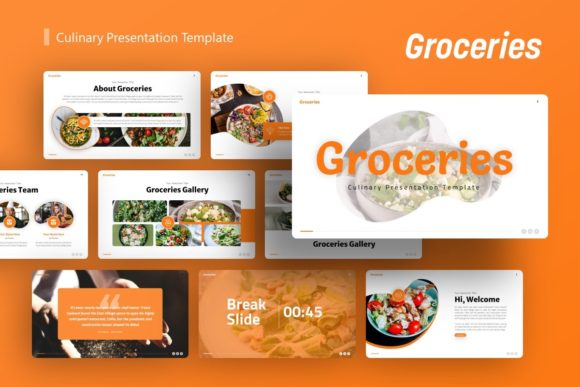
While the nomenclature suggests a focus on food and dining, the true value of this template lies in its adaptable visual language. Culinary presentations inherently rely on high-quality imagery, clean typography, and organized layouts to showcase products effectively. These same design principles are universally applicable to other industries. A photographer showcasing a portfolio benefits from the same image-forward layouts used for menu displays. Similarly, a startup pitching a new product utilizes the same hierarchy of information found in recipe breakdowns to explain features and benefits.
This cross-industry relevance is not accidental; it is a result of intentional design choices. The template serves as a case study in semantic flexibility. When a user approaches this asset, they are not locked into a gastronomic narrative. Instead, they are acquiring a system of 35 distinct slides that prioritize content clarity. For educators and researchers, this means complex data can be presented with the same visual appeal as a high-end restaurant guide. For corporate entities, it offers a departure from sterile, traditional slide decks, introducing warmth and texture that can humanize brand messaging without sacrificing professionalism.
Technical Architecture and Customization Depth
The practical utility of any digital asset is defined by its technical foundation. This presentation template is built upon Master Slides, a critical feature for efficient workflow management. Master Slides allow users to make global changes to fonts, color palettes, and logo placement across multiple slides simultaneously. This ensures consistency—a key tenet of professional branding—while significantly reducing the time spent on repetitive formatting tasks. For agencies managing multiple client accounts or businesses updating quarterly reports, this architectural choice translates directly to operational efficiency.
Furthermore, the inclusion of handcrafted infographics distinguishes this template from generic alternatives. Rather than relying on stock charts or basic shapes, the template provides pixel-perfect illustrations that are fully resizable and editable. This vector-based approach ensures that graphics remain crisp regardless of screen size or projection resolution. Users can modify these infographics to represent financial growth, organizational structures, or creative processes, maintaining the bespoke aesthetic even when the content diverges entirely from the original culinary theme. The ability to drag and drop pictures into designated placeholders further streamlines the production process, allowing non-designers to achieve professional results without navigating complex layer masks or alignment tools.
Strategic Applications Across Professional Verticals
The breadth of use cases for this template demonstrates its capacity to serve distinct functional needs. By analyzing specific verticals, we can better understand how to adapt the asset for maximum impact.
- Creative Agencies and Portfolios: Visual storytelling is paramount in this sector. The template’s emphasis on negative space and image hierarchy allows designers to let their work speak for itself. The 35-slide variety provides enough options to create comprehensive case studies without visual fatigue.
- Corporate and Business Profiles: Trust is built through clarity and polish. Using a template with refined typography and structured layouts helps convey competence. The infographic elements are particularly useful for annual reviews or internal training where data retention is the goal.
- Startups and Pitch Decks: Investors respond to narratives that are easy to follow. The logical flow inherent in this template’s structure supports the classic pitch arc: problem, solution, market, and traction. The aesthetic uniqueness can also help a startup stand out in a sea of minimalist tech decks.
- Educators and Researchers: Engagement is the primary challenge in academic presentations. The visually rich nature of this template breaks up dense text, using visual metaphors to aid comprehension. The editable graphics allow for the accurate representation of methodologies and findings.
Navigating File Assets and Licensing Realities
A crucial aspect of implementing this template involves understanding exactly what is delivered and what requires external sourcing. The package includes the PowerPoint .PPTX file, a documentation file for guidance, and a set of vector icons. These components form the functional skeleton of the presentation. However, users must note that all images seen in the preview are for demonstration purposes only and are not included in the downloadable files.
This distinction is vital for project planning. It necessitates that users have access to their own high-quality photography or stock image subscriptions. From an SEO and accessibility perspective, this separation is actually beneficial. It forces creators to select imagery that is genuinely relevant to their specific content rather than relying on generic placeholders. When integrating new images, users should ensure they optimize file sizes to maintain presentation performance and add appropriate alt-text if the deck will be distributed digitally. The documentation file serves as an essential resource for unlocking the full potential of the master slides and vector elements, ensuring that the learning curve does not impede project timelines.
Design Principles for Effective Adaptation
Successfully repurposing a themed template for a different industry requires adherence to core design principles. Simply swapping text is often insufficient; one must consider the emotional resonance of color and form. If adapting the Collect template for a fintech company, for example, the warm tones associated with culinary arts might need adjustment to cooler blues or greens to signal security and stability. Because the graphics are editable, this transition is seamless, but it requires deliberate intent.
Typography also plays a significant role in adaptation. The font pairings selected for a menu may feel too informal for a legal briefing. Utilizing the Master Slide functionality to update typefaces across the entire deck ensures that the tone matches the content. The 35-slide count offers ample opportunity to test different layout configurations before settling on a final selection. Users should resist the urge to use every available slide; curation is as important as creation. Selecting only the slides that enhance the narrative prevents cognitive overload and keeps the audience focused on the core message.
Optimizing Workflow and Output Quality
To maximize the return on investment for this presentation asset, users should establish a standardized workflow. Begin by reviewing the documentation to understand the layer structure and master slide relationships. Next, define the brand guidelines—colors, fonts, and logo usage—before opening the template. Applying these parameters globally at the outset prevents rework later. When utilizing the picture placeholders, ensure images share a consistent style or filter treatment to maintain visual cohesion. The pixel-perfect illustrations should be treated as modular components; they can be combined, recolored, or simplified to fit specific data points.
For those distributing the presentation online, export settings matter. While the source file is fully editable, shared versions should be optimized for their destination. PDF exports preserve layout integrity for email distribution, while video exports may be preferable for social media teasers. Understanding the technical specifications of the .PPTX format ensures that animations and transitions function correctly across different versions of presentation software. This attention to technical detail reinforces the professional quality of the final output.
Evaluating Long-Term Value and Scalability
The decision to adopt a specific presentation template should factor in long-term scalability. The Presentation Template - Collect offers value beyond a single project because of its foundational strength. The master slide system allows organizations to create derivative templates for different departments or sub-brands while maintaining a cohesive visual identity. The vector icon set reduces the need for future graphic design expenditures, providing a library of assets that can be reused across various media.
Moreover, the template’s structure encourages better content organization. By working within a pre-defined grid and layout system, creators are forced to distill their messages to their most essential elements. This constraint often leads to clearer, more effective communication than starting from a blank canvas. For freelancers and agencies, owning a versatile, high-quality template reduces turnaround times for client projects, directly impacting profitability. The balance of aesthetic appeal and functional rigor makes it a sustainable tool in a professional arsenal.
Ultimately, the effectiveness of this template depends on the user's willingness to engage with its features deeply. It is not merely a collection of pretty slides but a comprehensive system for visual communication. Whether presenting a new culinary concept, a corporate strategy, or a creative portfolio, the underlying mechanics of customization, master slides, and vector scalability provide the necessary infrastructure for success. By treating the template as a flexible framework rather than a rigid container, professionals can unlock its full potential to tell compelling stories across any domain. The integration of form and function, supported by thorough documentation and editable assets, positions this template as a significant resource for anyone tasked with translating complex ideas into engaging visual narratives.