Visualizing Extreme Weather: The Strategic Value of Tornado and Hurricane Minimal Design Assets
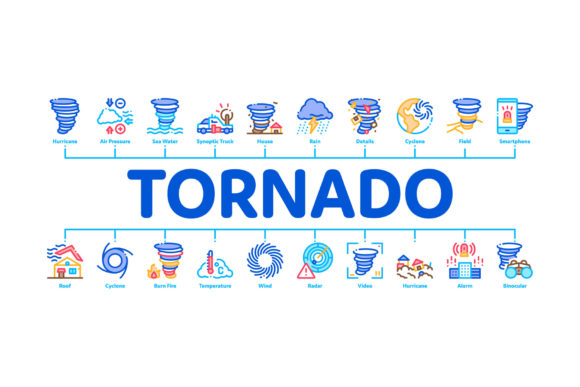
In the contemporary landscape of digital communication, visual clarity is not merely an aesthetic preference; it is a functional necessity. As professionals across marketing, education, and emergency management sectors strive to convey complex meteorological data, the demand for specialized graphical assets has evolved. The Tornado and Hurricane Minimal design category represents a significant shift in how we visualize severe weather events. Moving away from chaotic, photorealistic depictions that can induce panic or cognitive overload, this minimalist approach offers a refined, versatile solution for modern content creators. By utilizing resources such as the Tornado And Hurricane Minimal Infographic Web Banner Vector, organizations can communicate urgency and information with precision, ensuring that critical messages are received without unnecessary visual noise.
The Shift Toward Functional Minimalism in Meteorological Graphics
Minimalism in design is often misunderstood as simply "less is more." However, in the context of weather illustration, minimalism is about "less is clearer." When dealing with high-stakes topics like cyclones and twisters, the primary goal is information transfer rather than dramatic effect. The Tornado and Hurricane Minimal aesthetic strips away extraneous details to focus on the essential mechanics and impacts of these phenomena. This aligns perfectly with current user experience (UX) trends where audiences expect immediate comprehension. Whether displayed on a mobile device during an emergency alert or embedded in a corporate sustainability report, these streamlined illustrations reduce processing time and enhance retention.
This trend mirrors broader movements in data visualization and infographic design. Just as financial charts have moved toward cleaner lines and negative space to highlight trends, weather graphics are adopting similar principles. The Cyclone On Planet Globe concept, for instance, abstracts a global crisis into a digestible icon or banner element. This abstraction allows marketers and educators to discuss climate change and severe weather patterns without the imagery competing with the accompanying text or data points. It is a strategic choice that prioritizes the narrative over the spectacle.
Versatility Across Formats: JPG and EPS in Professional Workflows
For freelancers, agencies, and in-house creative teams, asset versatility is a key determinant of workflow efficiency. The availability of Tornado and Hurricane Minimal assets in both JPG and EPS formats addresses the distinct needs of different production environments. Understanding when and why to use each format is crucial for maintaining professional quality across various media touchpoints.
- EPS (Encapsulated PostScript): This vector-based format is the industry standard for scalability. When working with the Tornado And Hurricane Minimal Infographic Web Banner Vector, the EPS file ensures that the graphic remains crisp whether it is resized for a business card or blown up for a trade show backdrop. Vectors are mathematically defined, meaning there is no pixelation. This is essential for print materials, large-format signage, and responsive web design where resolution independence is mandatory.
- JPG (Joint Photographic Experts Group): While vectors handle structure, JPGs remain vital for rapid deployment in digital ecosystems. A pre-rendered JPG version of a Twister Weather Concept Illustration is optimized for social media posts, email newsletters, and blog headers where file size and compatibility take precedence over infinite scalability. Having both formats available eliminates the need for designers to manually rasterize vectors, saving valuable billable hours.
This dual-format approach supports the agile workflows demanded by modern content calendars. Marketers can deploy a JPG for an immediate LinkedIn post regarding storm preparedness while simultaneously using the EPS master file to develop a comprehensive annual risk assessment report. This flexibility makes the Tornado and Hurricane Minimal collection a practical investment rather than a single-use asset.
Contextual Relevance: From Roof Damage to Global Climate Narratives
The true value of these illustrations lies in their specific contextual applications. Generic storm clip art fails to resonate because it lacks narrative specificity. In contrast, targeted concepts like Tornado Blowing House Roof serve a distinct purpose in the insurance, real estate, and home improvement sectors. For insurance adjusters and claims departments, this specific imagery helps policyholders visualize coverage scenarios without the emotional distress associated with disaster photography. It creates a neutral, professional tone that facilitates difficult conversations about property damage and mitigation.
Conversely, the Cyclone On Planet Globe illustration serves macro-level narratives. Environmental NGOs, educational institutions, and green technology firms utilize this imagery to discuss systemic issues. Here, the tornado or hurricane is not just a local event but a symptom of planetary health. The minimal style allows this heavy subject matter to be integrated into forward-looking content about resilience, adaptation, and technological innovation. It bridges the gap between scientific reality and public engagement, making complex climatological concepts accessible to a lay audience.
Meeting the Needs of Modern Content Creators
The rise of the creator economy and the democratization of design tools have changed who produces weather-related content. It is no longer solely the domain of government meteorologists or major news networks. Small business owners, local bloggers, and independent educators are now creating authoritative content about severe weather safety and climate awareness. These individuals often lack the budget for custom illustration or the skills to draw meteorologically accurate diagrams from scratch.
Tornado and Hurricane Minimal assets fill this gap by providing professional-grade visuals that are accessible and easy to implement. They empower non-designers to maintain brand consistency and visual authority. Furthermore, for professional designers facing tight deadlines, these assets serve as high-quality foundational elements. Instead of drawing a twister from zero, a designer can import the Twister Weather Concept Illustration and customize the color palette to match client branding, focusing their creative energy on layout and typography rather than basic shape construction.
Aligning Visuals with Broader Industry Trends
The adoption of minimalist weather graphics is also a response to changing consumer expectations regarding digital accessibility and inclusivity. Hyper-realistic images of destruction can be triggering for individuals with trauma related to natural disasters. Minimalist representations offer a safer, more inclusive alternative that conveys necessary information without re-traumatizing the viewer. This sensitivity is increasingly important for brands and organizations aiming to build trust and demonstrate social responsibility.
Additionally, these assets align with the technical demands of modern web performance. Search engines and users alike prioritize fast-loading pages. Complex photographic backgrounds and heavy video files can degrade site speed, negatively impacting SEO and user engagement. Lightweight vector banners and optimized JPGs contribute to faster load times and better Core Web Vitals scores. By choosing Tornado and Hurricane Minimal graphics, webmasters are making a technical SEO decision as much as a stylistic one. The clean lines and solid colors of minimal design compress efficiently, ensuring that visual richness does not come at the cost of performance.
Practical Implementation Strategies for Professionals
To maximize the ROI of these assets, professionals should integrate them strategically rather than decoratively. Consider the following practical applications:
- Educational Infographics: Use the Tornado And Hurricane Minimal Infographic Web Banner Vector as a header for step-by-step safety guides. The clean aesthetic leaves ample whitespace for instructional text, improving readability and compliance with safety protocols.
- Risk Assessment Dashboards: Incorporate the Cyclone On Planet Globe icon into internal dashboards used by logistics companies or supply chain managers. The icon acts as a universal signifier for weather-related risk factors, allowing for quick scanning of global status reports.
- Insurance Policy Explainers: Utilize the Tornado Blowing House Roof illustration in digital brochures explaining windstorm deductibles. The stylized nature of the image keeps the focus on the contractual terms rather than the emotional weight of property loss.
- Social Media Awareness Campaigns: Deploy the Twister Weather Concept Illustration in carousel posts during Severe Weather Preparedness Week. The consistent minimal style creates a cohesive visual identity across multiple slides, increasing brand recognition and message retention.
Future-Proofing Visual Communication
As we look toward the future of digital communication, the intersection of aesthetics and utility will continue to define successful design strategies. The relevance of Tornado and Hurricane Minimal assets extends beyond current trends; it speaks to a permanent shift in how we process information in an age of saturation. Audiences are becoming increasingly sophisticated, demanding visuals that respect their time and intelligence.
Furthermore, as climate adaptation becomes a central pillar of urban planning and business strategy, the visual language surrounding severe weather must mature. We are moving past the era of sensationalism into an era of resilience and preparation. Minimalist graphics support this transition by framing extreme weather as a manageable, understandable phenomenon rather than an incomprehensible catastrophe. They provide the visual vocabulary needed for constructive dialogue.
For entrepreneurs, marketers, and creators, investing in high-quality, versatile assets like these is an investment in communication efficacy. Whether delivered via scalable EPS for print dominance or optimized JPG for digital reach, these illustrations serve as reliable tools in a rapidly changing environment. They enable professionals to tell stories of risk, safety, and global change with clarity and confidence. Ultimately, the power of the Tornado and Hurricane Minimal collection lies not just in what it depicts, but in what it enables: clearer understanding, faster workflows, and more effective communication in a world where weather matters more than ever.