Evaluating Business Meeting Conference Minimal Assets for Professional Design
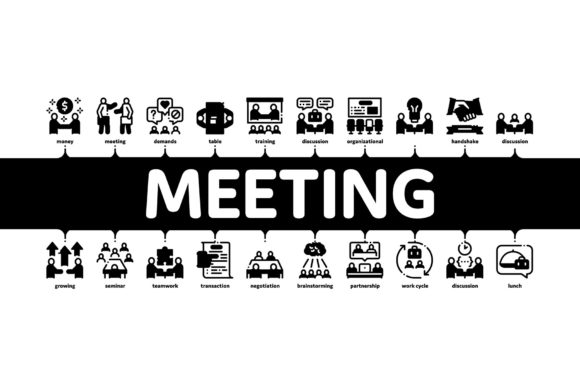
In the landscape of corporate communication and digital marketing, visual clarity often dictates how effectively a message is received. The concept of Business Meeting Conference Minimal refers to a specific design aesthetic and asset category that prioritizes clean lines, ample negative space, and simplified representations of professional interactions. These assets, frequently available as infographic web banner vectors, serve as foundational elements for websites, presentations, and marketing collateral. For designers, marketers, and business owners evaluating visual resources, understanding the functional utility and strategic application of this minimalist style is essential for making informed procurement and design decisions.
Defining the Minimalist Business Aesthetic
When researching Business Meeting Conference Minimal assets, it is important to distinguish this style from generic corporate clip art. This design philosophy focuses on reducing visual noise to highlight core concepts such as partnership, communication, and strategic planning. Illustrations in this category typically depict businessmen and women in abstracted or stylized forms, engaging in seminars, discussions, or collaborative work without excessive detail regarding clothing, facial features, or background environments.
The primary objective is cognitive efficiency. In an era of information overload, complex imagery can distract from the accompanying text or data. Minimalist vector illustrations act as visual anchors that support content rather than competing with it. When evaluating these assets, one should look for consistency in stroke weight, color palettes, and geometric abstraction. High-quality minimal assets maintain recognizability even when scaled down significantly, a critical factor for responsive web design where banner space varies across devices.
Strategic Reasons for Selecting Minimalist Vectors
Professionals typically seek out Business Meeting Conference Minimal resources to solve specific communication challenges. The decision to adopt this aesthetic is rarely purely decorative; it is usually driven by functional requirements.
- Enhanced Readability: Web banners and infographic headers often contain significant amounts of text. Minimalist backgrounds ensure high contrast and legibility, improving user experience and accessibility scores.
- Brand Versatility: Simplified illustrations are inherently neutral. They can be easily recolored to match specific brand guidelines without requiring extensive redrawing. This makes them ideal for agencies managing multiple clients or organizations undergoing rebranding.
- Faster Load Times: Vector formats like EPS, when converted to SVG or optimized raster formats for the web, generally have smaller file sizes than photorealistic images. This contributes to better site performance and SEO rankings.
- Cross-Cultural Applicability: Abstract representations of business people tend to be less culturally specific than photographs. This reduces the risk of unintended bias and makes the assets suitable for global campaigns.
Benefits and Tradeoffs in Application
While the Business Meeting Conference Minimal style offers distinct advantages, it is not universally superior. Evaluating the tradeoffs helps determine if this approach aligns with current project goals.
Key Benefits
The most significant benefit is scalability. Because these assets are typically created as vectors (EPS format), they can be resized infinitely without loss of quality. This allows a single asset purchase to cover everything from a small mobile icon to a large-format trade show backdrop. Additionally, the timeless nature of minimalism protects the investment; unlike trendy 3D renders or dated stock photography, clean line art tends to remain relevant for years, reducing the need for frequent asset refreshes.
Potential Tradeoffs
The primary limitation is emotional resonance. Minimalism is intellectual and efficient, but it can sometimes feel sterile or impersonal. If the goal of a campaign is to evoke deep empathy, showcase company culture through authentic faces, or demonstrate a tangible physical product, minimalist illustrations may fall short. Furthermore, because this style is popular, there is a risk of ubiquity. Without customization, a website may inadvertently look similar to competitors using the same stock libraries. Users must weigh the efficiency of ready-made minimal assets against the unique character required for their specific brand identity.
Situational Fit: When to Use vs. When to Avoid
Determining whether Business Meeting Conference Minimal assets are the right choice depends heavily on context. Decision-makers should assess the following scenarios.
Strong Fit Scenarios
This aesthetic excels in B2B environments, SaaS platforms, financial services, and educational seminars. It is particularly effective for:
- Data Visualization: When explaining complex processes, workflows, or statistics, simple illustrations prevent cognitive overload.
- Landing Page Headers: Where the primary call-to-action must take precedence over visual flair.
- Internal Documentation: Training manuals and HR materials benefit from clear, non-distracting visuals that focus on procedure and policy.
- Placeholder Content: During wireframing and prototyping, minimal assets provide realistic scale without committing to a final photographic direction.
Alternative Considerations
Alternatives should be considered when the project demands high emotional connection or specific realism. Lifestyle photography is preferable for consumer-facing brands selling experiences or fashion. Detailed 3D isometric illustrations may be better suited for technical hardware explanations where component accuracy matters. If the target audience values authenticity and human connection over corporate efficiency, candid photography or hand-drawn organic styles may yield better engagement metrics.
Technical Evaluation: JPG vs. EPS Formats
When acquiring Business Meeting Conference Minimal assets, understanding the delivered formats is crucial for workflow integration. Most premium packs include both JPG and EPS files, each serving different stages of production.
EPS (Encapsulated PostScript) is the source file. It is editable in vector software like Adobe Illustrator or Affinity Designer. This format is essential for customization, allowing users to change colors, adjust line thickness, combine elements from different banners, or extract individual icons. If you anticipate needing to adapt the asset for future campaigns, the EPS file is the primary value driver.
JPG (Joint Photographic Experts Group) is a rasterized preview or final output format. While convenient for quick insertion into documents or basic web use, JPGs cannot be edited without quality loss. They lack transparency support, which can limit their utility in layered web designs. Relying solely on JPGs restricts long-term flexibility. Therefore, evaluation criteria should prioritize vendors who provide well-organized, layered EPS files alongside high-resolution JPG previews.
Making the Final Selection Decision
Ultimately, selecting Business Meeting Conference Minimal assets requires balancing aesthetic preference with practical necessity. Buyers should create a checklist based on their immediate and future needs. Does the asset pack include diverse representations of business interactions beyond just handshakes? Are the vector layers organized logically? Is the license appropriate for commercial web use?
By focusing on these functional attributes rather than just visual appeal, professionals can select resources that not only enhance the current project but also serve as a sustainable library for future communications. The goal is to find assets that facilitate clearer communication, streamline the design process, and maintain professional standards across all touchpoints. When evaluated through this lens, minimalist business vectors prove to be a strategic tool for effective corporate storytelling.