Solar Energy Technicians Minimal Design Assets
Visual communication in the renewable energy sector often struggles to balance technical accuracy with modern aesthetic appeal. When creating content for solar installation companies, educational platforms, or green technology blogs, finding imagery that feels professional yet uncluttered is a significant challenge. This is where Solar Energy Technicians Minimal design assets fill a critical gap. These vector illustrations strip away unnecessary noise to focus on the essential elements of alternative power technology, providing creators with clean, scalable graphics that communicate expertise without overwhelming the viewer.
The core value of this specific design style lies in its versatility and clarity. Unlike photorealistic stock images that can feel generic or dated, minimal vector art offers a timeless quality that adapts to various brand identities. Whether you are designing a web banner for a new battery storage service or an infographic explaining panel repair processes, these illustrations provide a cohesive visual language. They allow marketers, educators, and business owners to present complex technical concepts like circuit integration or safety protocols in a way that is immediately digestible for audiences ranging from homeowners to industry professionals.
Understanding the Visual Components and Formats
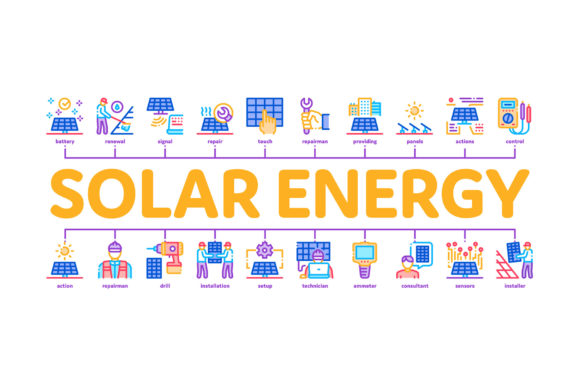
When evaluating Solar Energy Technicians Minimal assets, it is important to understand exactly what is included in the package and how the file formats serve different purposes. A comprehensive set typically features distinct illustrations covering the full lifecycle of solar technology. This includes depictions of technicians performing installations on rooftops, detailed cross-sections of solar batteries, close-ups of panel maintenance, and symbolic representations of alternative power grids. The minimal style ensures that each element is distinct, using negative space effectively to prevent visual fatigue.
The availability of both JPG and EPS formats is a practical necessity for diverse workflows. The JPG format serves as a ready-to-use solution for digital applications. It is ideal for social media posts, blog headers, email newsletters, and quick website mockups where immediate implementation is required without specialized software. These rasterized versions maintain crisp edges at standard web resolutions, making them perfect for content creators who need speed and convenience.
Conversely, the EPS (Encapsulated PostScript) format is the industry standard for professional scalability and customization. As a vector-based file, EPS allows designers to resize illustrations infinitely without losing quality, which is essential for large-format printing like trade show banners, vehicle wraps, or building signage. More importantly, EPS files are fully editable in software like Adobe Illustrator or Affinity Designer. This means you can adjust colors to match your specific brand palette, modify line weights, combine elements, or isolate specific icons for use in app interfaces. For agencies and freelancers managing multiple clients, this editability transforms a single asset pack into a flexible design system.
Practical Applications Across Industries
The utility of these minimal illustrations extends far beyond simple decoration. They solve specific communication problems across various sectors involved in the green energy transition.
- Educational Content Creation: Teachers and trainers use these visuals to create slide decks and handouts that explain how photovoltaic cells work or the safety gear required for high-voltage repairs. The minimal style reduces cognitive load, helping students focus on the learning objective rather than distracting background details.
- Marketing and Lead Generation: Solar installation companies utilize web banner vectors to create high-converting landing pages. Clean illustrations of happy technicians or sleek battery units build trust and professionalism, signaling to potential customers that the company uses modern, reliable technology.
- Technical Documentation: Repair manuals and user guides benefit significantly from simplified line art. When illustrating troubleshooting steps for home battery systems, a minimal vector diagram is often clearer than a photograph, as it can highlight specific components without the visual clutter of real-world shadows and textures.
- Corporate Reporting: Sustainability reports and investor presentations require data visualization. These assets provide consistent iconography for infographics showing energy output, carbon offset metrics, or infrastructure growth, ensuring the document looks polished and authoritative.
Why Minimalism Works for Technical Topics
You might wonder why a "minimal" approach is preferred over detailed, realistic renderings for such a technical field. The answer relates to information processing and brand perception. Solar energy involves complex electrical engineering and construction logistics. When an audience is trying to understand a new concept, such as net metering or inverter compatibility, realistic imagery can sometimes introduce too much extraneous detail. A photo of a roof might show shingles, gutters, trees, and power lines, all of which compete for attention.
Minimal illustrations act as a visual filter. By representing a solar panel as a clean geometric shape and a technician as a stylized figure, the designer directs the viewer’s eye exactly where it needs to go. This abstraction also makes the content more inclusive and universally applicable. A minimal technician illustration does not carry the same specific demographic or geographic markers as a photograph, allowing global companies to use the same assets across different regional markets without needing reshoots. Furthermore, the clean aesthetic aligns psychologically with the values of the renewable energy industry: efficiency, innovation, cleanliness, and forward-thinking sustainability.
Key Considerations Before Licensing or Using
While Solar Energy Technicians Minimal assets are incredibly useful, selecting the right pack requires careful consideration to ensure they meet your long-term needs. Not all vector packs are created equal, and overlooking certain details can lead to frustration during production.
First, verify the technical accuracy of the illustrations. While minimalism implies simplification, the equipment depicted should still resemble current industry standards. If the solar panels look like outdated models from twenty years ago, or if the safety harnesses are drawn incorrectly, it undermines credibility with knowledgeable audiences. Look for assets that have been reviewed or designed by someone familiar with the trade.
Second, check the layer organization within the EPS files. High-quality vector assets will have grouped and labeled layers (e.g., "Technician," "Panel," "Background"). Poorly organized files where every path is merged into a single layer make customization nearly impossible. If you plan to change the color of the technician's vest to match your client's branding, you need properly separated elements.
Third, consider the licensing terms relative to your intended use. If you are a freelancer creating work for commercial clients, ensure the license covers commercial end-products. Some licenses restrict usage to personal projects or limit the number of impressions for digital ads. Understanding these boundaries upfront prevents legal issues down the road.
Finally, assess the stylistic consistency of the entire collection. If you plan to use these assets across a multi-page website or a series of brochures, every illustration must share the same stroke width, corner radius, and color logic. Mixing two different minimal styles can look disjointed and unprofessional. A well-curated pack functions as a unified kit, allowing you to mix and match batteries, panels, and people seamlessly.
Enhancing Digital Presence with Vector Banners
In the digital age, the first impression of a solar business often happens through a web banner. These prime pieces of digital real estate must load quickly while conveying a strong message. Solar Energy Technicians Minimal Infographic Web Banner Vectors are specifically optimized for this purpose. Because they are vector-based, they result in significantly smaller file sizes compared to high-resolution photography when exported correctly for the web. This contributes to faster page load speeds, which is a crucial factor for both user experience and search engine optimization.
Beyond performance, these banners offer superior responsiveness. A single master EPS file can be adapted to create horizontal hero banners, square social media ads, and vertical mobile stories without pixelation or awkward cropping. This adaptability ensures that your visual messaging remains consistent across all touchpoints. For small business owners and marketers operating with limited budgets, investing in a high-quality minimal vector pack often provides a better return on investment than hiring a photographer for a single day, as the assets can be repurposed indefinitely for future campaigns, seasonal promotions, and new service launches.